Fields of Variation
Order X Variation
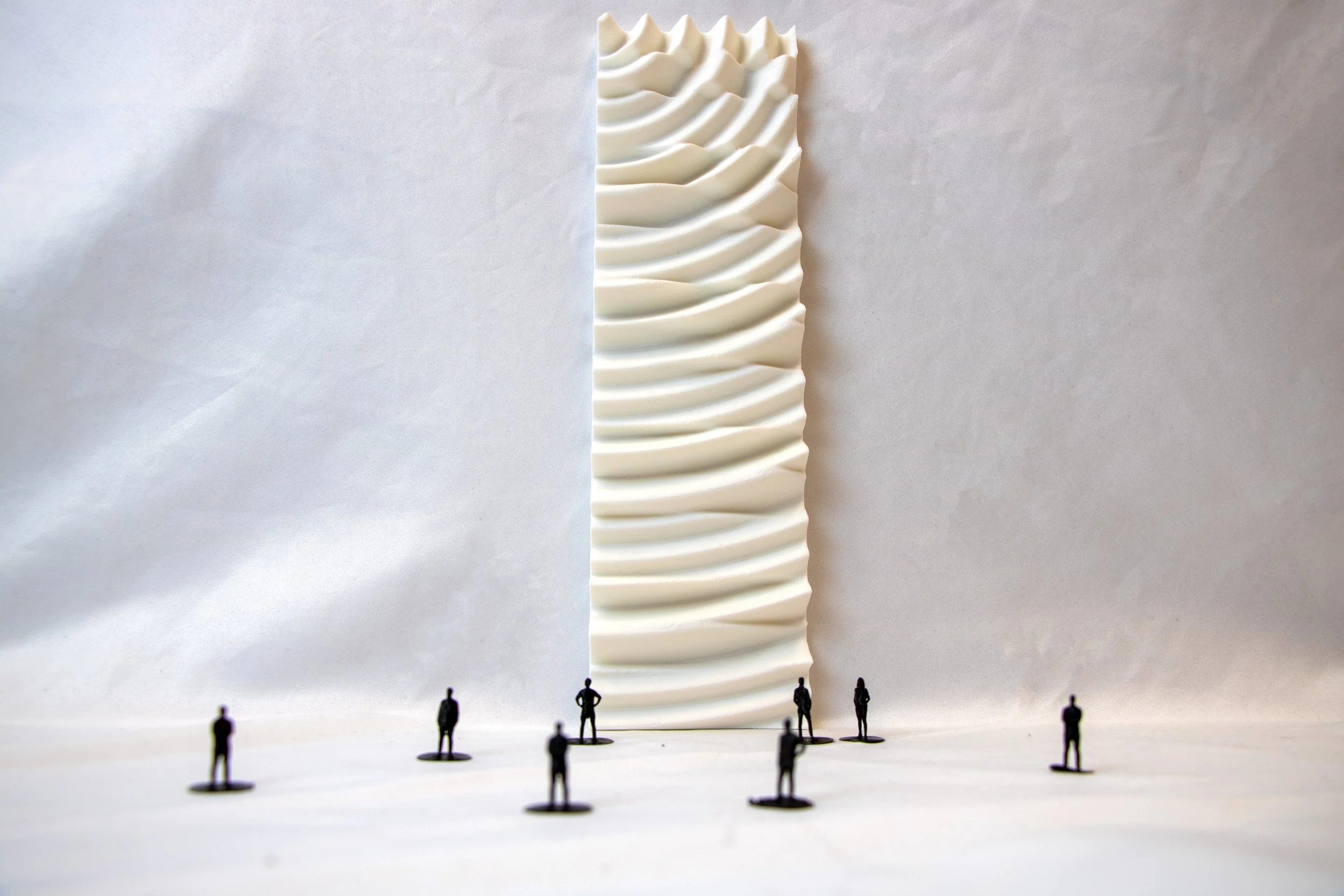
How much variation can a set of rules hold?
Fields of Variation translates Python and trigonometry into a family of physical surface studies. Rhythmic ridges, dense textures, and transitions between them explore how mathematical relationships can take on depth and architectural presence.
Order and variation are not treated as opposites to resolve. Repetition gives each surface a structure, while shifts in geometry change its rhythm, texture, and the way light falls across it. Presented with scale figures, the models suggest possible facades while remaining open studies of pattern and form.
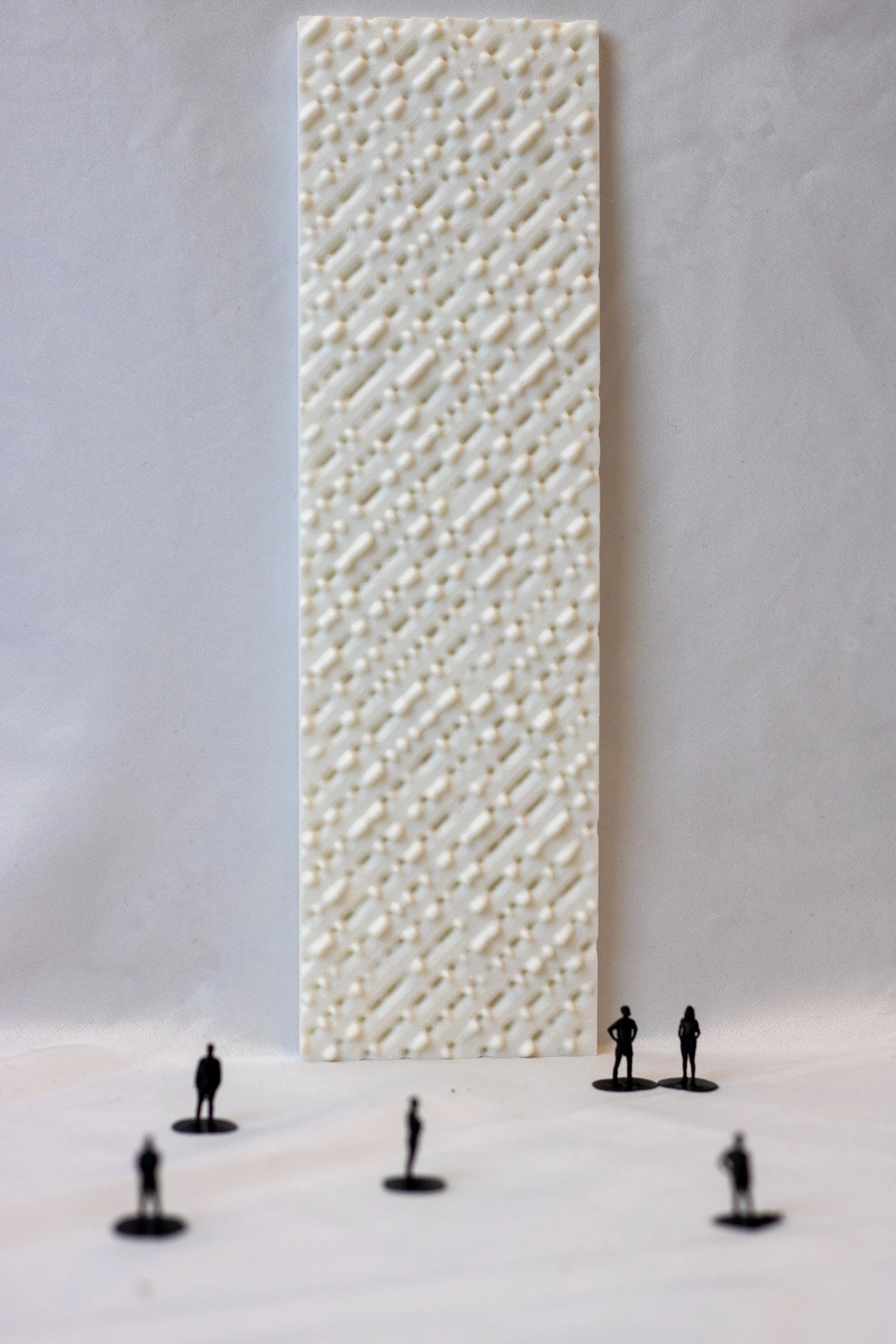
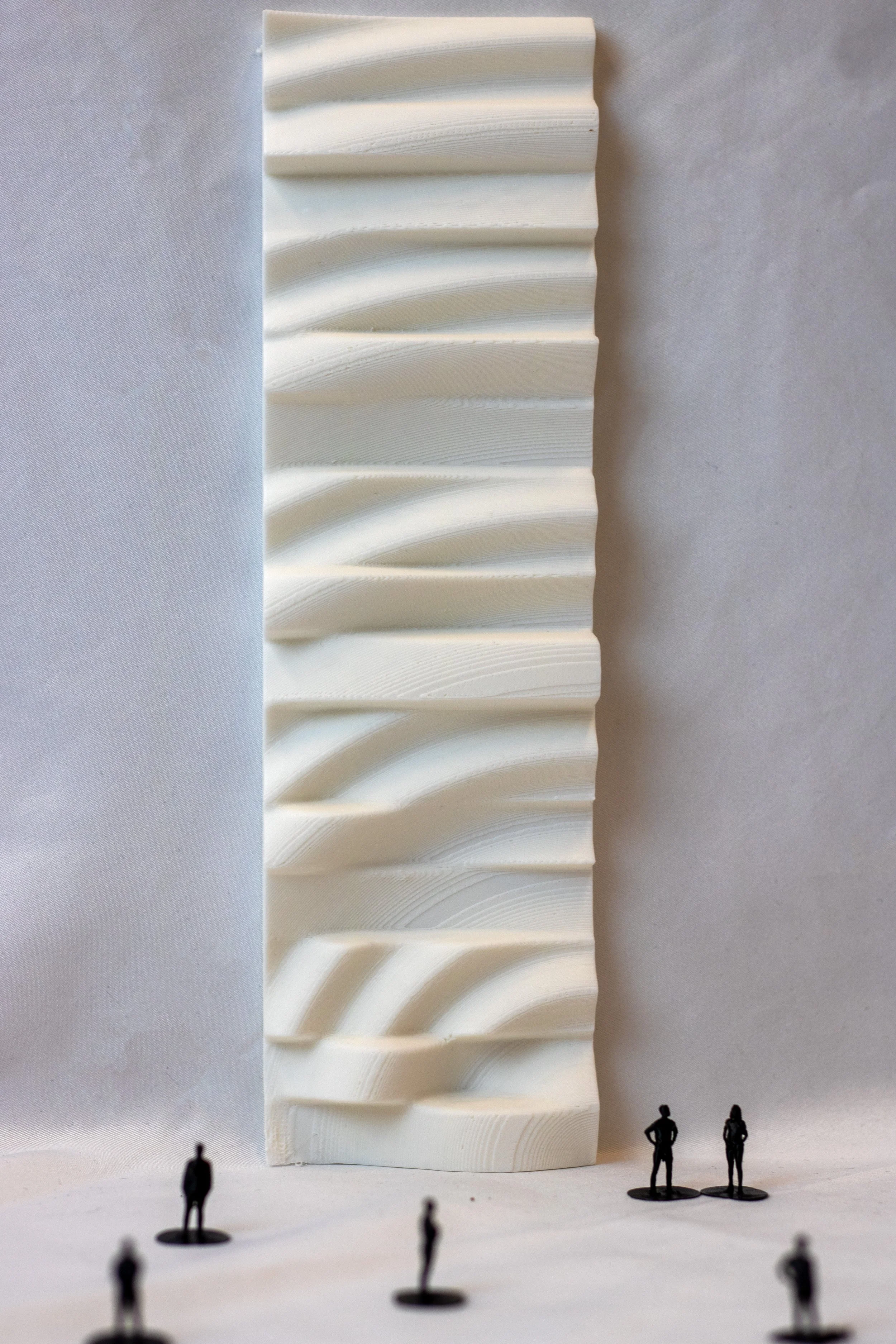
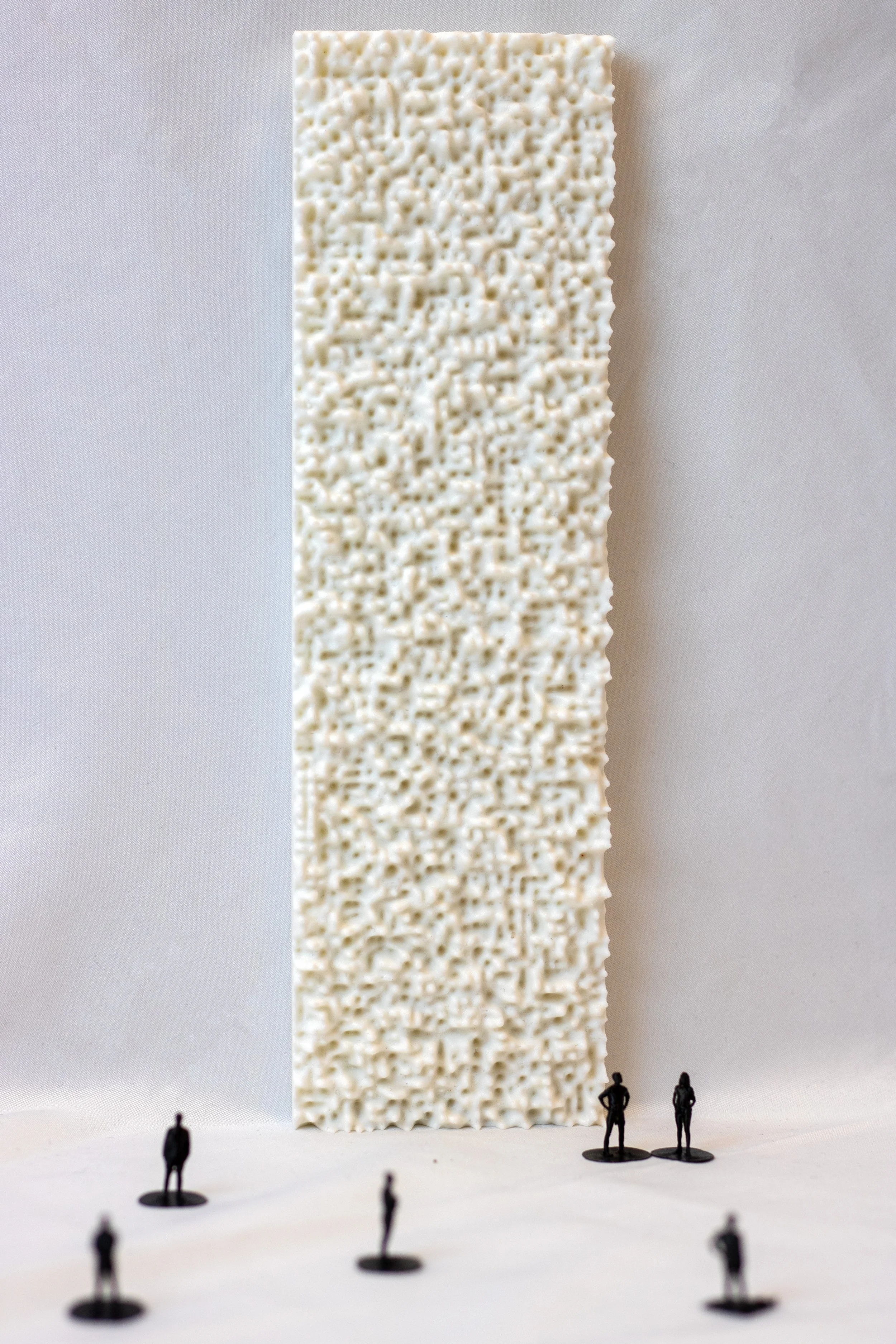
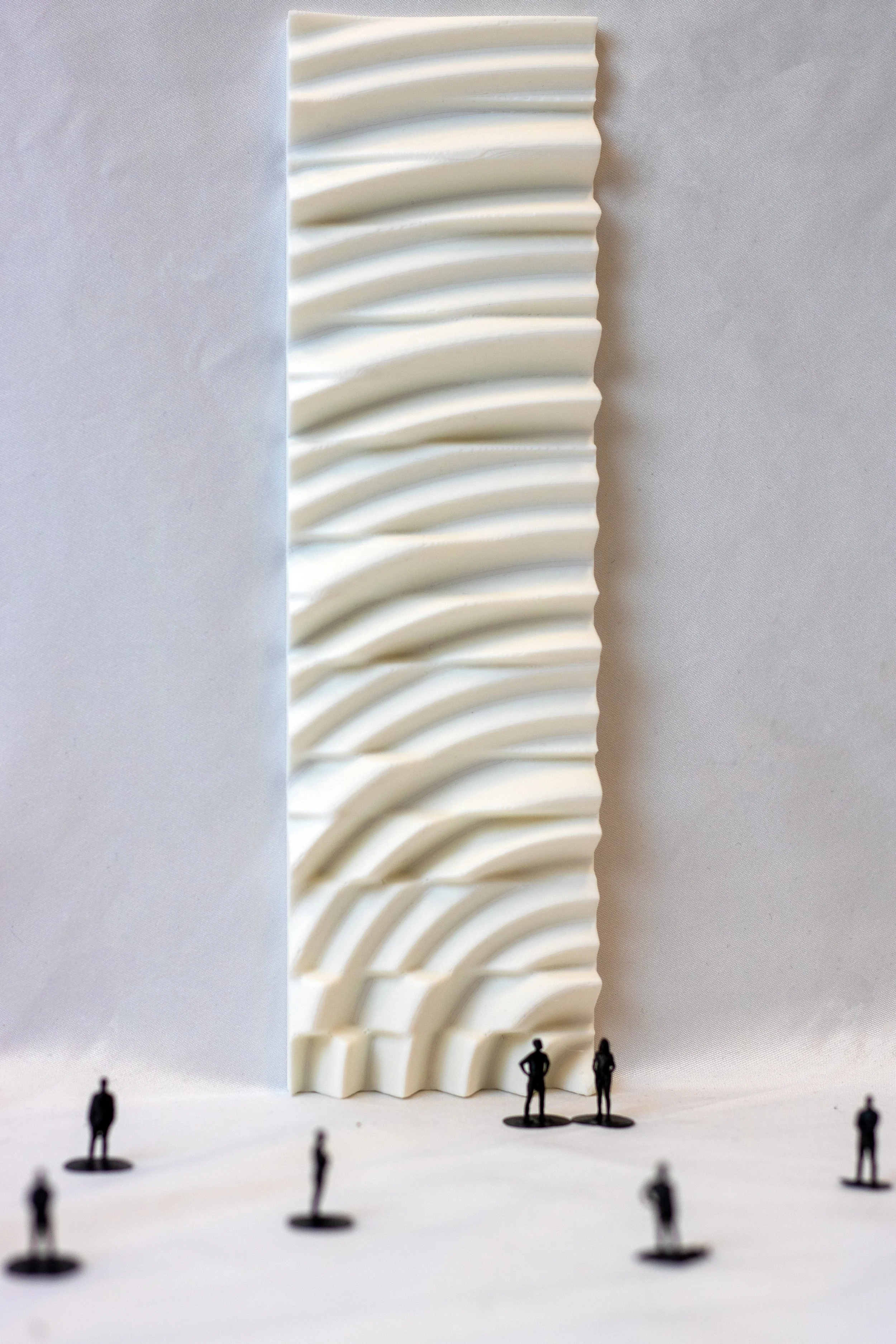
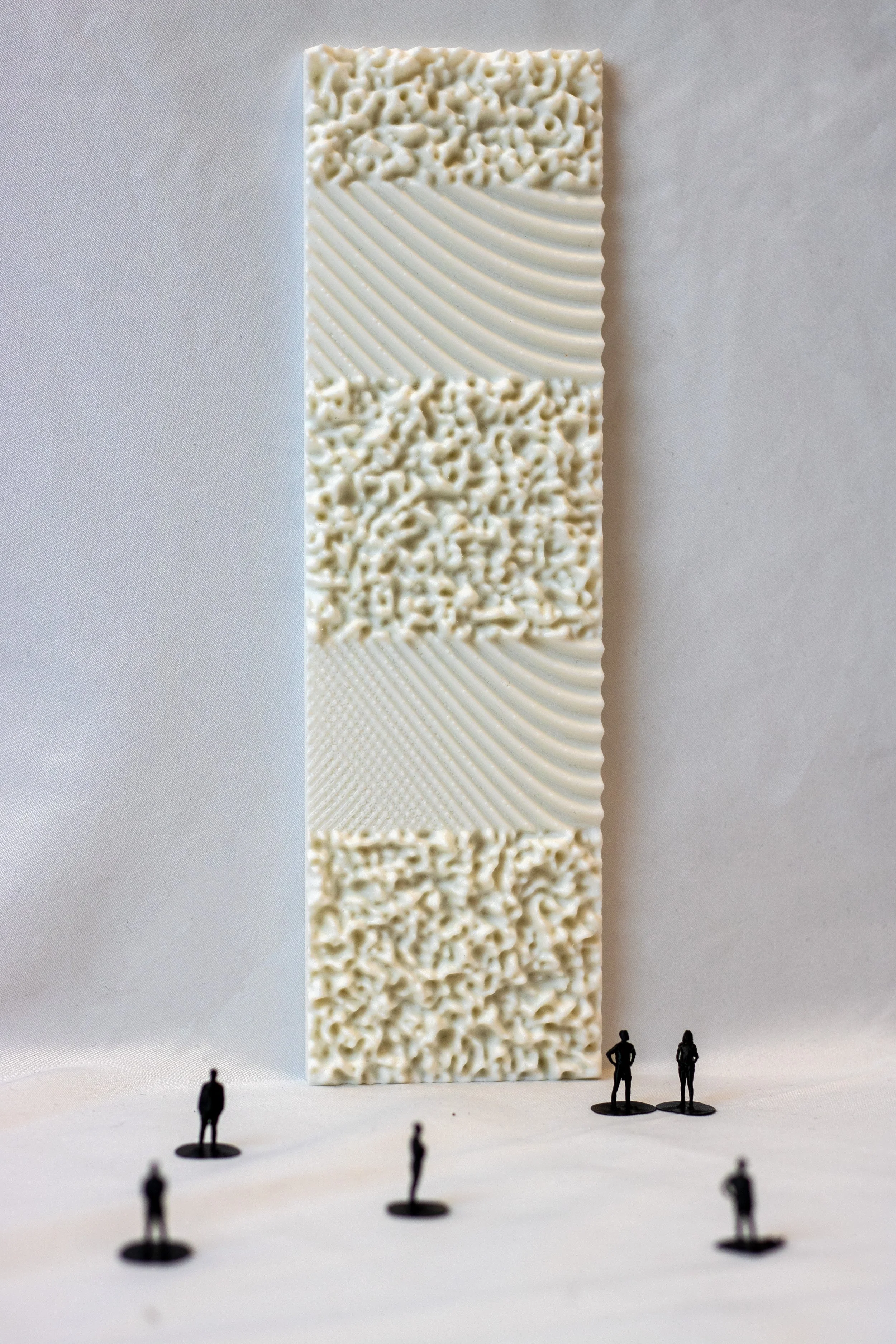
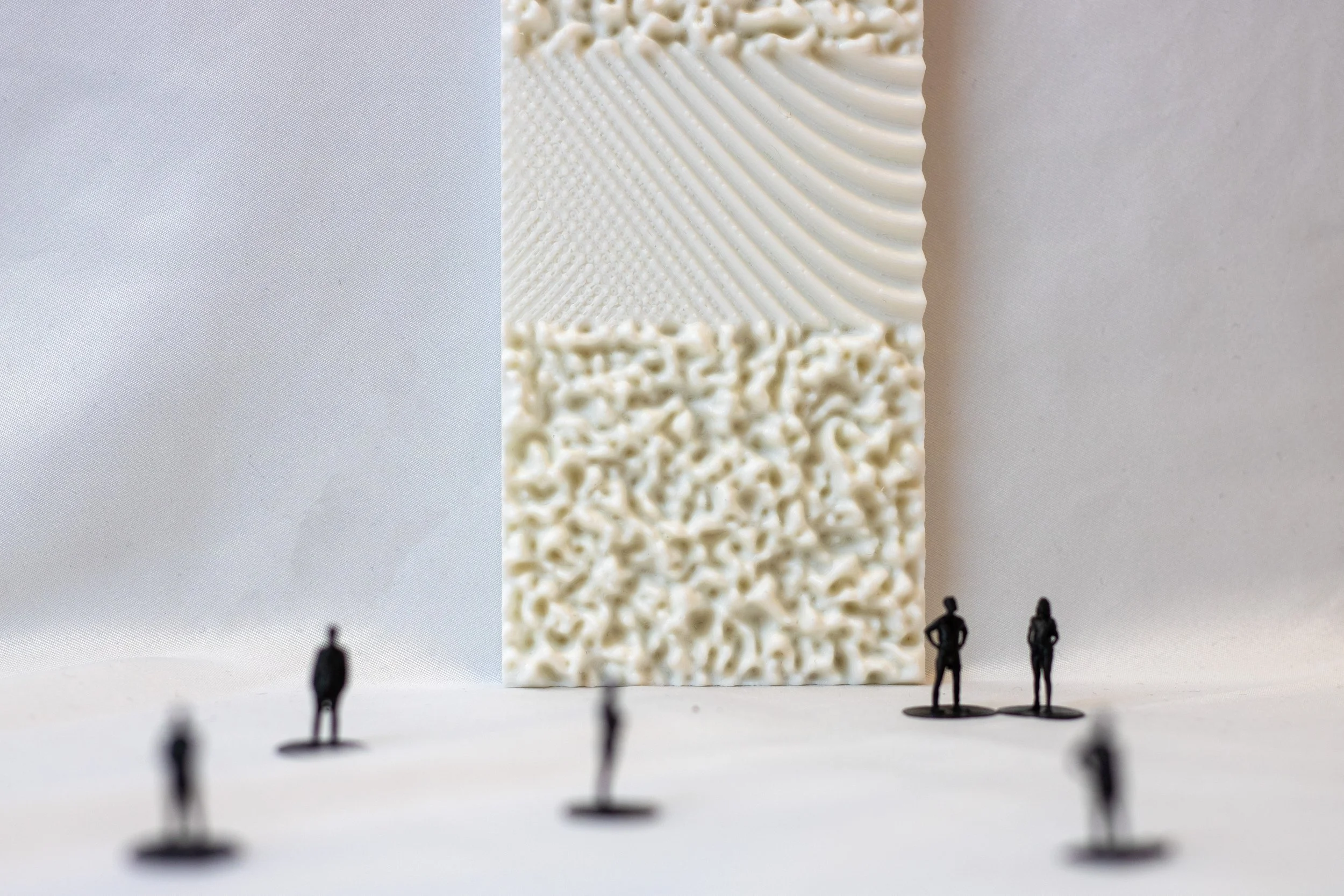
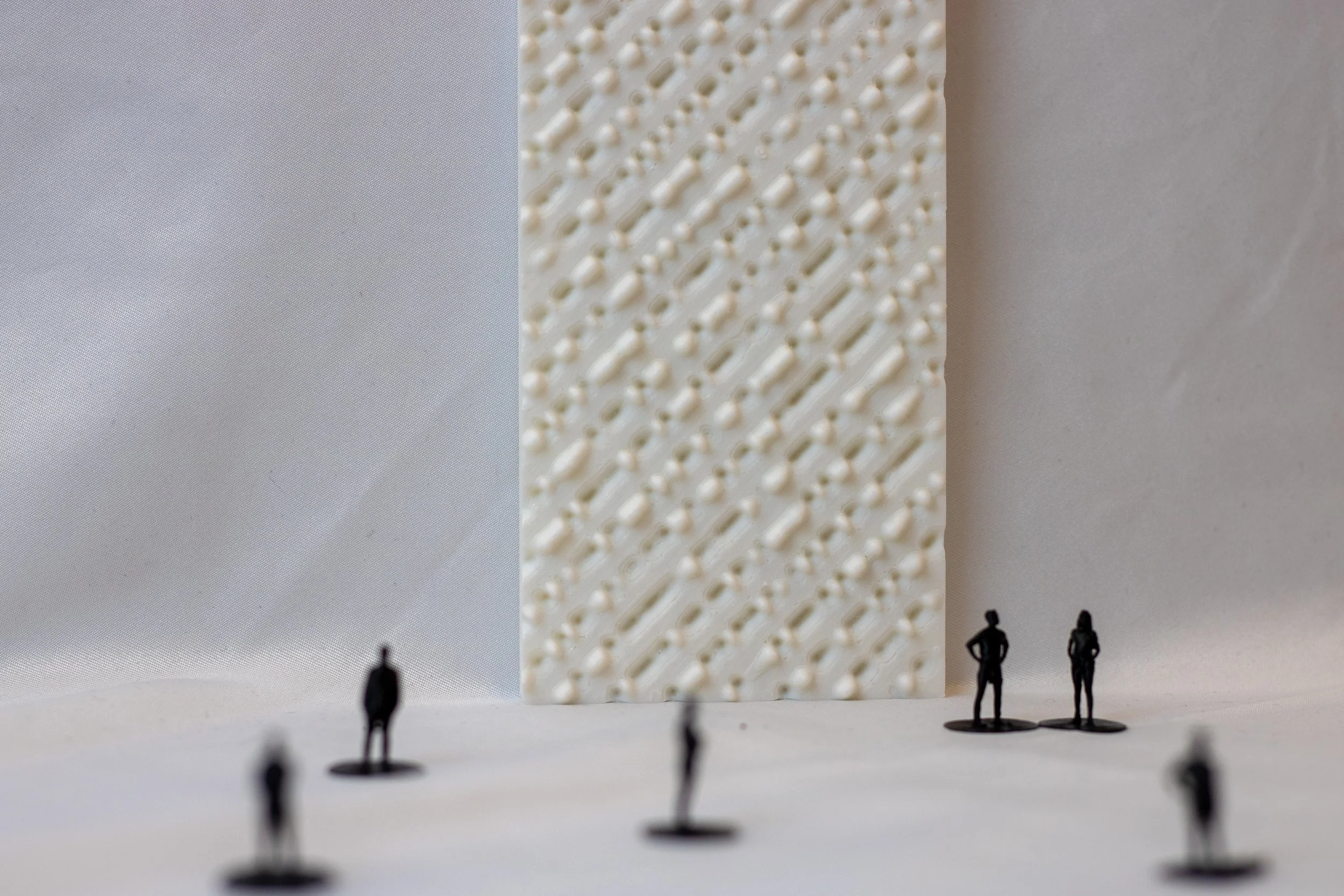
Rhythm, density, transition
Some studies stretch into broad, continuous waves; others gather into closely spaced relief. In the hybrid surfaces, these distinct conditions meet within a single field. The interest lies in the transition: where a recognizable rhythm becomes a different texture without losing its connection to the whole.
Making the surfaces physical brings another reading to the mathematics. Light and shadow reveal depth, while the scale figures invite a shift from a small object to an imagined architectural surface.
2025
University of Michigan - Ann Arbor
Virtual Engagement, Prof. Mania Aghaei Mebodi
Python, Grasshopper, Computational Design, trigonometry, and physical surface studies